Conrad Weber
Conrad Weber was born on January 18, 1880 in Walter, Saratow, Russia. He was born to Christian & Anna Margaretha Weber. He was one of 12 children. The oldest son and child to survive to adulthood. Conrad was 22 years old when he came with his wife and one child, along with his parents from Russia to Quincy. They came by boat to New York, then by train to Ritzville, Washington where they stayed with relatives. His uncle Adam had purchased land for them in Babcock, just west of Quincy, so they stayed with Adam until they were able to purchase horses, and other supplies and began farming in Quincy. This was in 1902. They needed water for the horses and Conrad later wrote that they paid $5 a barrel for it in Quincy. It had to be hauled from Willow Springs, 9 miles away.
"We bought a tank and hauled our own water from a spring 3 miles away from the shack we built. We did some plowing that fall then went back to Ritzville with our horses for the winter." In the spring of 1903 they plowed and seeded ground, so that fall was their first harvest of grain, cut with a header and stacked because they had no threshing machine.
The next spring of 1904 the crop was better but nothing to brag about. Many farmers were ready to pull out and many did because of poor harvests. The spring of 1905 had a good rain, and produced 31 bushels to the acre, which was very good. "In 1920 we didn't even grow enough to harvest for seed. "We cannot leave, we only stay, we are too poor to get away." "
"In 1903 we had built a shack of 1x12 boards that ran up and down with strips over the cracks. We papered the inside, it only had one room. We had a little cook stove, a table I made, a chair or two. We bought a little stove in Ephrata. We had a cow with us too." In 1905 they built a three room plastered house, where our third child was born in 1907, a son. I proved on the land in 1908, and moved this house over here where the sand was not so bad. Hannah was born in 1909. Later enlarged it and lived in it until the time of this writing 1963.
Conrad wrote "One time I got my hand in the hopper and it got torn up. The machine stopped and when I got my hand out it was bleeding pretty bad. We had two young ladies cooking for us in the cook house, so I went there and they washed it and wrapped it up a little. We were only a mile from town and it was not worth stopping to take me to town because I was not sick, so I walked in. It was just noon time and I asked this man to tend to my hand. He said he would eat first and then take care of me. His stomach was more important than my hand. He put some stuff on it and wrapped it up and I walked back home. It is still stiff because some cords were cut. It always gets cold first because the circulation is not so good in it. Flesh was scooped out of my hand."
We used to have church services in the houses. In 1904 we built a community church, Lutherns, Reformed and others attended, Richardson donated the land and a retired minister came from Ritzville to preach to us. A school house was built three miles west of here and we eventually moved it more center of Quincy. We had some good teachers and some not so good. Conrad said "my oldest daughter would have been a good business woman, if she had an opportunity to go to school." The Webers dug a well at their homestead that was 210 feet and it was not enough, So they dug another that went 85 feet more. Then the water came up within 36 feet. It cost $2.00 a foot to dig the first and $2.50 a foot for the second well. They moved the three room house from the homestead and added to it in 1914. Added rooms downstairs and an upper floor. In 1929 added a basement and furnace, and added onto the back.
"When we first came here we had a few chickens, and a cow. Raised hogs too. We bought sugar, flour and coffee. We traded eggs and butter for other staples. Later we separated the milk and shipped the cream. Gas was 12 cents then. We butchered meat , cooled and roasted and packed the meat into crocks covered with lard. Then later canned it in fruit jars. That was better."
"I went to school in Russia. If you were the only son you were exempt from serving in the army. It was a good thing if we could speak Russian but few spoke it well. In day school we learned German but I went to night school to learn Russian. I was almost drafted because so many young men my age had come to America. We have never been sorry we came to America. I though my mother would die the first few years. She couldn't talk to no one. My parents decided they would go back to Russia again and wanted me with them. In the end they did not go back. "
"However My wife's father was a tailor in Ritzville and although he made pretty good money decided to go back to Russia. They said if they didn't like it they would come back. They went back and he took sick with a slow cancer. Then war broke out in Russia in 1912. He died and left the mother and two daughters but they couldn't get back. After being stuck in Russia during the war, finally in 1920-1921 people were starving in Russia. They got. money and finally got tickets to Canada. It took a lot of work and money but we finally got them brought over from Canada. I had to buy them new passports in Vancouver because their current passports said to Canada only. I bought them new passports for $4.00 that said through Canada to the U.S. When we finally got it settled they came here and got acquainted, they liked it better. The church helped."
"I got my first car the fall of 1916, a used Studebaker. I paid $800 for it. Used it from 1916-1920. Had a good crop the year I bought it. Then bough a Ford and in 1928 bought another Studebaker. We went to Portland, Walla Walla, Spokane, Ritzville, Odessa Etc. If you could make a trip from there to Quincy without trouble or a flat tire you were lucky."
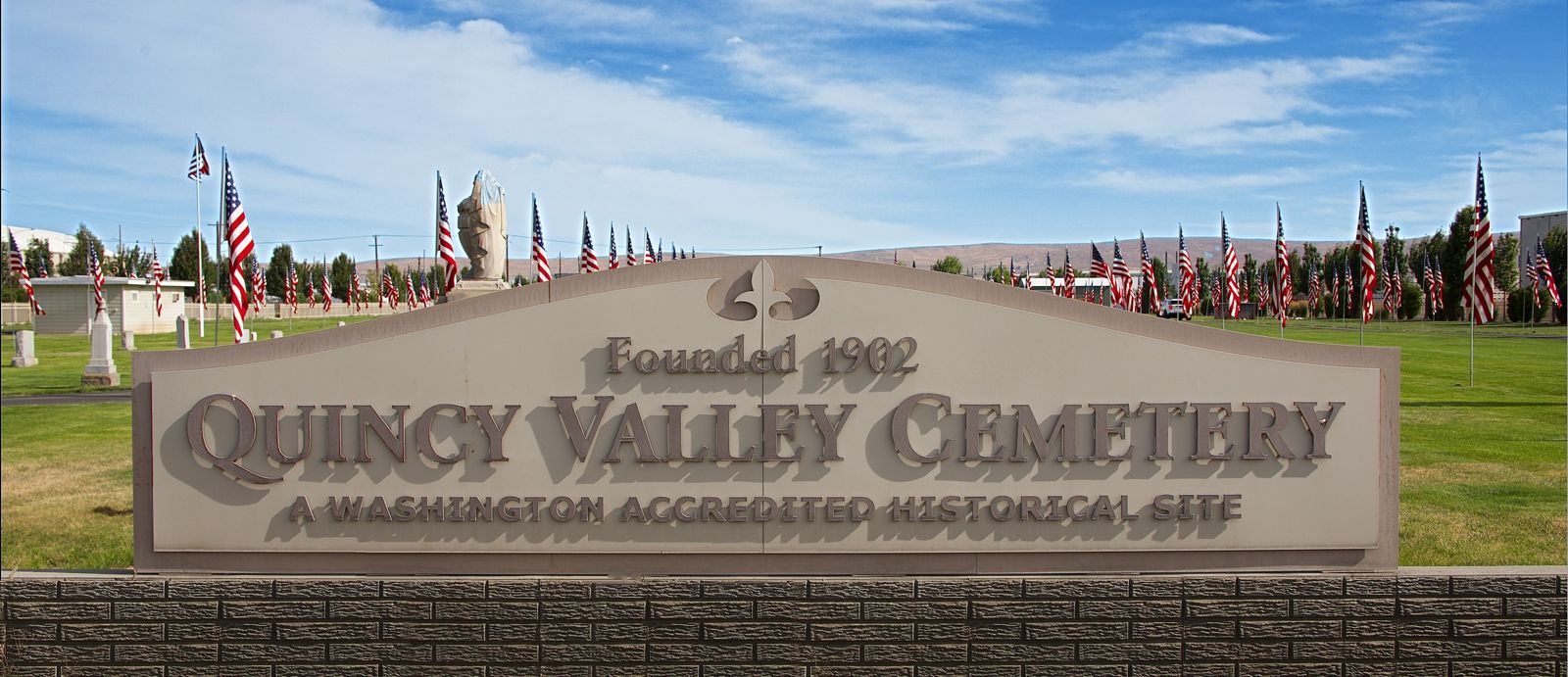
Conrad and Amalia had 6 children. Five of which lived to adulthood. They lived in Quincy and farmed there until they retired. Conrad passed away on January 13, 1969. He was buried on January 15, 1969 in the Quincy Valley Cemetery.
The world Conrad knew
Family milestones in gold, history for context
The Weber name at Quincy Valley Cemetery
 Johann Adam Weber1835 – 1920
 Katharina Margaretha Weber1837 – 1916
 Christian Weber1858 – 1934
 Anna Margaret Weber1859 – 1913
 Jacob W Weber Sr.1876 – 1961
 Heinrich Weber1878 – 1968
Be the first to share a memory
No account needed. Have one? Sign in
Help manage Conrad's memorial
Family members and close friends can help add photos, stories and moments from Conrad's life. Ask the family to add you.
Sign in to ask