John Price Johnson, Jr. was born May 23, 1927 to John Price Johnson, Sr. and Ida Clifford Darwin in Erick, Oklahoma, joining four much older siblings, Ruth (22) Darwin (20) Christine (17) and Walter (14). John’s parents were raised in Tennessee and married on September 25th, 1904 along the Cumberland River in a horse and buggy, the preacher standing beside them to perform the ceremony. The family eventually made a move out to Western Oklahoma in 1911 in hopes of easing Ida’s asthma condition caused by a bout of pneumonia she suffered as a teen.
The move to Oklahoma was a difficult decision leaving behind family and home in Tennessee. The Oklahoma landscape could not have been more different with barely a tree in sight, but the family thrived and scraped and saved enough money to purchase a 160-acre farm in 1918, just three miles west of Erick. It is on this farm that John was raised through the Great Depression and World War II.
His was a caring family and there was always plenty to eat, plenty of hard work and many good friendships and adventures along the way. At an early age, John began playing piano, self taught and playing beautifully by ear. It remained a lifelong joy for him. He attended Choctaw School, a 2-room schoolhouse built on a far corner of the farm property, up until the 8th grade. John skipped up to the 6th, when he was the only 5th grade student.
When John was just 6 years old, the last of his siblings still living at home, Walter, left the family farm. John was heartbroken. His dog, Governor, was a constant companion and protector during those years. With no kids nearby, he started spending as much time as possible with his oldest brother Darwin and his wife Alma along with their three children, Thayer, Jo and Ruth. His nephew and nieces were like siblings to John throughout his entire life.
John saw his first airplane in the sky around this time. A high wing single engine airplane that looked identical to a metal model he had of the Charles Lindberg plane. He was fascinated as it approached from the east and flew right overhead. He imagined what it must be like to be up there, looking down. This vision remained with him and sparked hopes that someday he too would fly. He learned later that this plane may well have been Charles Lindberg, as he was touring the United States promoting aviation and flew in the area around the same time.
Cotton was the cash crop for the family farm and like most farms in those days, they had a large kitchen garden where most of their vegetables were grown. They also raised chickens, pigs and a small dairy herd that grazed the native prairie grasses near the creek. All of this food was preserved without refrigeration and John fondly remembers taking the creamy sour milk and churning it into butter.
Fall into winter was cotton picking time and everyone got in on the action. The cotton had to be picked 3 to 4 times as the cotton matured at different times. School would close during this time, and John’s dad would go to Oklahoma City and stand on a wooden stool to recruit people to come to the farm and help. Recruits would come live on the farm in a separate home on the property and John developed strong bonds with these families. The cotton harvest was long days of hard, back breaking work, pulling along sacks filled with the cotton bolls that could weigh up to 90 lbs.
Making a living farming was never easy, but the Great Depression coupled with years of drought, terrible wind and blowing sand delivered the last blow for many small farmers in the area. The Dust Bowl plagued the farm year after year for over a decade, sketching many memories for John to share. He recalls one spring when he and his family watched as a 200-mile wide storm with 65 mile per hour winds carrying black dust high in the air rolled towards them. The storm blotted out the sun and it turned the sky almost completely dark. John’s parents remained calm, but other neighbors fled fearing the end of the world. This was the infamous “Black Sunday” dust storm of 1935.
Year after year, due to the challenges of the drought and winds, many farmers with mortgages lost their land. John’s father was known to save for hard times and this served the family well through the early years of the Depression. The family bought new cars, and the house was well maintained and wired for electricity. However, as the Depression deepened prices for cotton dropped. The dust storms caused crop failures resulting in little or no income from the farm. John’s father was able to hold on to the family farm during those years with the help of John’s sisters, Ruth and Christine, who were employed elsewhere as teachers and able to send money home to help during especially difficult times.
When John was 10 years old and the drought was waning, the cotton crop was looking promising following some much needed rain. The crop was 8-10 inches high and his father was looking forward to bringing in a good crop. And yet, not a single cotton sack was filled that year. One afternoon, John watched as his father stood on the porch as a terrible hailstorm pelted his fields for 15 minutes. After the storm passed they walked out to bare stalks sticking out of the ground. As his father surveyed the damage, he spoke quietly to his son, “...don’t ever be a farmer in Western Oklahoma”.
And yet, when John was 11 years old he began helping his father in the fields, handling a team of mules all by himself cultivating the growing cotton. He had always helped with the farm, garden and home chores, but his work handling the mules, and later the tractor, developed into a money making venture for John.
1940 was a time of rapid change. John’s father purchased a John Deere tractor and reliable electricity came to rural America, including Western Oklahoma. The first thing that John’s mother wanted was a refrigerator! John not only learned to drive the tractor, but got a driver’s license at age 14 in order to drive his mother to town to do the laundry. He began providing his labor to neighboring farms using the new tractor, plowing up their fields and splitting the profits with his father. It was around this time that news of the escalating war in Europe and China began to fill the airwaves and newspapers.
December 7, 1941 was a beautiful sunny day with family visiting and preparations underway for the Christmas holiday time. But the startling news arrived of the Pearl Harbor attack. John recalls the entire town congregating in the school auditorium to hear President Roosevelt’s riveting speech, broadcast from a large radio placed on the stage for all to hear. They knew their lives were about to change. All resources were immediately diverted to the war effort.
Production for civilian life ceased and goods were rationed and tended well beyond their useful life. Shortly after this, news of Erick’s first war casualty arrived and sadly, the young man was a cousin of John’s, Johnny Wayne Renner.
Many families relocated to large cities and coastal areas to work in defense plants. John’s brother Darwin’s entire family moved to California to work as a welder in an Oakland shipyard. It was 1942 and John, who was 15 at the time, recalls the day they drove off in their 1936 Ford sedan towing their belongings in a 2-wheel trailer. These were indeed sad times.
As a teen, a friend gave John a set of encyclopedias from an electrical school in Chicago and those three books changed the course of his life forever, inspiring him to study electrical engineering. In four years time working on the tractor, John had saved $850. which was enough to almost fund a full semester at college.
While John was in high school he took the Greyhound bus to Arkansas for a visit with his sister Christine and her husband, Ted. John got a big surprise one day as they took him out to the local airport and offered him his first airplane ride in a beautiful bright yellow Piper Cub. The side window of the plane swung up to let him climb through and up into his seat. The window remained open for the whole ride and as John peered out over the wheel hub he realized the vision of being high up and looking down. He relished every moment, deciding then and there that he would learn to fly, someday!
John graduated high school in May 1944 as Salutatorian, having just turned 17, and that fall attended a semester at Oklahoma State University (now) using the hard earned money he saved to pay his tuition. While in school he worked at a bookstore and boarded in a shared room at a private home. John returned home when the semester was over to help his father on the farm while awaiting his draft notice. By now, the war was waning and the draft was soon abandoned.
He decided to volunteer for the “Occupation Army” in order to get help from the GI bill, but things were scaling back so fast that he was not accepted. Shifting gears, he took a bookkeeping class and got a job keeping books for the local cotton gin and wheat elevator. The job was expansive and included many long hours working the harvest season, often 16 hours straight, weighing and grading the wheat and cotton as each truck load came in. It was during this time that the war ended, with the bombing of Nagasaki in 1945.
John worked at the cotton gin for 2 ½ years for 75 cents an hour earning enough to return to college in 1948. He graduated in 1951 with his degree in Electrical Engineering. Following graduation, John headed west to California, securing a job at Westinghouse in Sunnyvale designing power transformers. It wasn’t long before John started thinking about learning to fly and had met a colleague at work who had a plane. His friend graciously offered the use of his plane for lessons which John took him up on, completing half of the training required for his license before being called up for duty.
Some of the most memorable times John had while living in California were spent backpacking in the high Sierras with his nephew, Thayer, who was attending San Jose State College at the time. Thayer had great enthusiasm for trout fishing and John quickly joined him in his favorite sport. The two fished the lakes of the Sierra foothills regularly but soon had the idea of making longer excursions into the back country. This was 1952 and backpacking was not at all common. Most of the equipment they would need for the trip they had to make themselves. They designed and built backpacks complete with curved backs and canvas sacks with zippered pockets and fashioned a folding reflective oven which cooked perfect biscuits. After several small trips trying out the gear and food choices, they embarked on a two-week long excursion into the backcountry, each carrying 80-pound packs. They camped and fished the many lakes and streams of the high Sierras in their sneakered feet, climbing Mitchell and Bigelow Peaks, reaching over 10,000 feet.
John was excited to show pictures of his trip to the Post 39 Explorer Scouts that he volunteered with as “Post Advisor”. The boys were immediately excited and of course wanted to backpack too, so John presented a plan to the Scout Council and soon after preparation began for an ambitious 60-mile excursion over twelve days into Emigrant Basin Primitive Area with eight 15-16 year old boys. This trip was the adventure of a lifetime for all and planning for another trip began soon for the following year into the King’s Canyon National Park. John formed and kept long lasting friendships with many of these boys as they grew up, along with their famlies.
In 1954, at 27 years old, after almost 4 years at Westinghouse, he received a draft notice from the Army at the near end of the Korean War. Passing the physical exam with flying colors, he was sent off to Infantry Basic Training. John’s degree in engineering got him sent to the Army Chemical Center near Aberdeen, Maryland to work in Research and Development. There he prepared measurement and analysis techniques for nuclear testing at the Nevada Test Site (NTS) and Pacific Proving Grounds (PPG) in the Bikini and Eniwetok atolls in preparation for Operation Redwing.
In the two years that he was in the Army, much of his time was spent at NTS and the PPG. During the mission, John would collect and analyze samples of the fallout from the nuclear tests conducted and was responsible for designing an instrument that could accurately read ground radiation levels from high above in a hovering helicopter.
Weekends were largely free and John’s thoughts returned to finishing up his pilot’s license. He had a friend in his squad who had similar thoughts and they partnered up, soon buying a trainer airplane at the advice of their flight instructor, John Heath. It was a Luscombe 8A, a 2-place “taildragger” that had no radio, starter, lights or even a battery, and had to be “hand-propped” to get going! They flew out of the Aberdeen Airpark which was little more than a grass strip on a farm outside of town. Weekends were spent cleaning up and working on the little plane, earning them the nickname “Wright Brothers” from the old timer pilots. After many training hours and mastering maneuvers, including spins, John passed his Private Pilots License in 1955. He took many interesting flights on the east coast, without incident or engine failure.
While on leave from army duties, John would spend his time traveling, making a 30-day adventure to Europe and a couple of weeks in Japan, always accompanied by friends. It was on a trip to Germany when John experienced skiing for the first time at a small ski area on a glacier. He and his friends had such a ball he decided that he would learn the sport once returning home. Shortly before getting out of the army, a friend sold him a pair of hickory skis, seven feet long and stiff with steel edges and polished bottoms.
When discharged in the fall of 1956, John drove his 1941 Plymouth Club Coupe back to California with his newly purchased skis sticking two feet out from under the trunk lid. While there he joined a group of skiers who would spend most weekends during the ski season up at Badger Pass Ski Area in Yosemite. John had returned to his job at Westinghouse, but soon left and moved to New Mexico for a new job, with his old hickory skis in tow.
John skied at Taos Ski Valley the second year it opened and every year since then through 2019 for a total of 63 seasons. John remembered the early days when Taos founder, Ernie Blake’s teenage son would drive a snowcat up the slope dragging a rope “tow” with early enthusiasts hanging on for dear life. Skiing was John’s favorite sport and he especially loved Taos and the mountains and the experience of being out after a new snowfall when the bright morning sun would glisten in the snow laden trees.
In Albuquerque, John worked at Sandia Corporation in the “Arming and Firing” group, designing and fielding the firing systems used to detonate Atomic test devices at NTS and PPG. This was during the Cold War and was a continuation of his work in the Army. During this time the Soviet Union and the United States escalated weapon development. This period of time ended in 1991 with the collapse of the Soviet Union. John continued to work for Sandia on different projects over the years, one of the most interesting of his career was developing and testing a surge arresting system tough enough to withstand direct lightning strikes.
John joined the Crossroads Flying Club in Albuquerque to continue his passion for flying and remained an active member for 18 years, eventually becoming President of the club. It was here that John met his best friend and business partner, Bill Hallett. Eventually they purchased a brand new Mooney 201 VP airplane together. They loved that plane and named her “Girlfriend Vicky”. Over the years John and Bill figured out ways to ease the burden of plane ownership, joining a flying business partnership and other related arrangements in order to keep themselves in airplanes and flying. John was very proud that in his many years as a pilot he flew over 230,000 miles with friends and family. He was fond of saying he lodged enough miles to go to the Moon- but not come home! Eventually he and Bill swapped out their last airplane for a triplex to become landlords in Albuquerque, where they continued in business for half a century.
Three young boys moved in next door to John to live with their grandparents, Bernie and Eddie Wilchek in the late 1950’s at a time when John was recovering from a serious illness. Terry, Steve and Tommy Baker were 6, 4 and not yet 2 years in age at the time and they were very curious about their new neighbor. They would come over when they saw the tall fellow out in his yard and John soon put them to work helping him pull dandelions, paying each boy a nickle
for every coffee can full of dandelions they could fill. John would take them down to the store to buy candies with their hard earned cash and a friendship grew between he and the boys. He started taking them on fishing and camping excursions, often to the Pecos Wilderness mountains that John loved, and he taught them about the great outdoors. The boys accompanied John on a week long camping trip to Yellowstone, a journey out to California to experience the ocean and beach, and a trip to Oklahoma to visit with John’s family. John would often fly the boys to their destination in his plane, and of course, he taught all three boys how to ski! While the boys did move back with their mother and even left the country for a time, all three young men eventually returned to New Mexico and continued their long held relationship. John always referred to the Baker boys as “my boys” and considered their families as his own.
When John first moved to Albuquerque, he invested in a 630-acre ranch adjacent to the Pecos Wilderness mountains that friends, Jake and Norma Green and several others were in the process of purchasing. The small group of stockholders worked as family, managing the cattle and guest ranch for a number of years, eventually selling the property to the Forest Service for wilderness expansion. In 1976 John purchased the 1896 original homestead cabin from the government in a sealed bid. Along with Tom Baker and Jim Handley they disassembled the cabin, moving the logs tediously up to the present location above Winsor Creek. The men reassembled the historic cabin carefully true to its original form. Mt. View Cabin serves as a welcome gathering place for family and friends, with Tom Baker working to maintain it beautifully while Terry manages the property.
John was 60 when Marrian Salomon- also single at 60- became his first wife. Marrian shared John’s love of adventure and travel. They convoyed together in three motorhomes with “brother” Thayer and wife Alice, and “sis” Ruth and husband Lew, roaming across the US and Canada until illness took Marrian’s life after a short 18 months. John grieved for 5 years before family lured him to a square dance, where Pat Borders was a pretty little dancer. Their honeymoon was Pat’s first trip to Switzerland. John delighted in showing Pat his favorite country, hiking and enjoying river cruises. They convoyed again in three family motor homes and enjoyed ten years together before illness took John’s second wife.
John’s other favorite family travels were with Thayer and Lew, rafting the Colorado River’s Grand Canyon and Oshkosh for annual airshows. In later years, John and Oklahoma “sis” Jo spent their widowhoods traveling for family visits in California, Oklahoma, Tennessee and Virginia. When John took a senior living apartment at LaVida Llena, he continued his daily mile walking habit, traversing the halls when weather required.
Honoring John’s wishes, his Celebration of Life was held July 5, 2026 as cremains were scattered at the Mt. View Cabin, at Pecos Canyon Estates. The cabin, now in a family trust, stands today as a true legacy and John’s gift to future generations of “kin folk”.
*This story of John’s life is based on his memoirs.



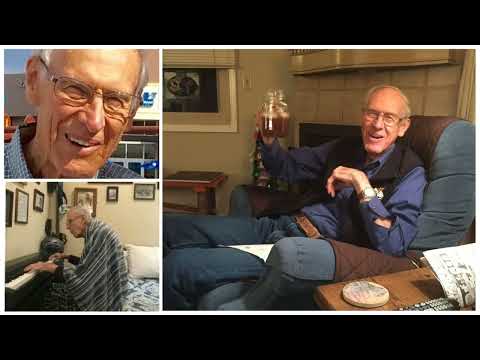 John's Slideshow
 Mountain View Cabin Interview Part1
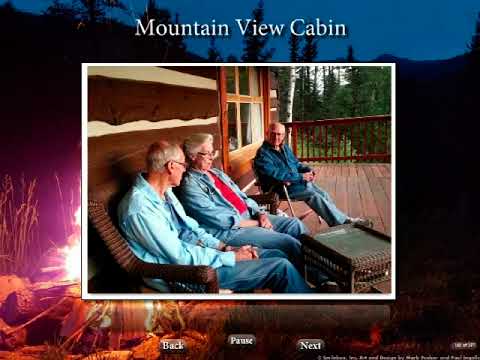 Mountain View Cabin Interview part2
 John playing music
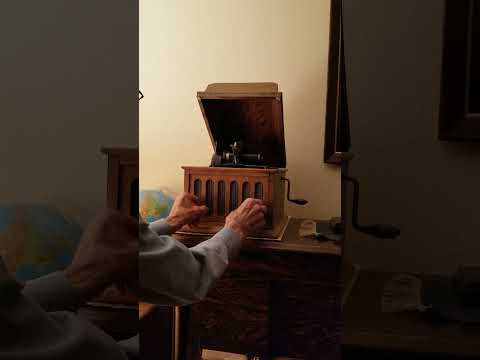 John's Musical Equipment
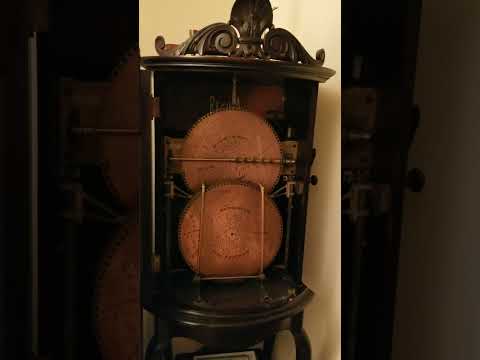 John's Musical Equipment
